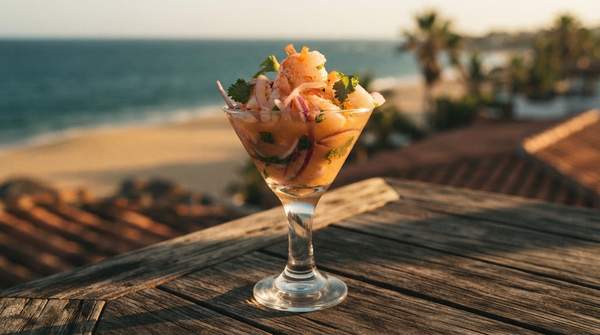
Ask for ceviche in Peru and you are really asking a second question: where, exactly, are you? The same word describes three quite different plates depending on whether you are standing on the Pacific coast, in a highland valley, or on the edge of the Amazon. Coastal ceviche is the classic — ocean fish cured in lime with hot peppers and onions. In the Andes, the dish pivots to freshwater trout and highland produce like corn and sweet potatoes. In the jungle, it turns to Amazonian river fish such as dorado and paiche. Understanding those three styles, and the geography and history behind them, is the key to both recreating them at home and ordering well when you travel.
The Ancient Roots of Peruvian Ceviche
Ceviche is far older than the lime that now defines it. Evidence suggests that civilizations along Peru's coast were preparing a form of the dish as far back as two thousand years ago. The Moche civilization, which flourished between roughly 100 and 800 AD on Peru's northern coast, is believed to have been among the first to develop something similar to today's ceviche — and their curing agent was not citrus at all, but the juice of the local tumbo fruit, a tart Andean passionfruit relative used to marinate fish.
That detail matters more than it might seem. It tells us the essential idea of ceviche — raw fish transformed by acid — predates every ingredient we now associate with it. The lime, the red onion, the cilantro: all of these arrived later. What the Moche contributed was the concept, and the technique of using a native acidic fruit to cook fish without heat. Everything since has been a series of substitutions built on that foundation.
Spanish Influence and the Birth of Modern Ceviche
The turning point came in the 16th century. The arrival of the Spanish brought significant changes to Peruvian cuisine, and ceviche was transformed along with everything else. The Spanish introduced citrus fruits — lime and lemon — which displaced tumbo as the primary marinating agent. They also brought onions and cilantro, both of which are now integral components of the dish.
What emerged from this collision was a genuine fusion rather than a replacement. The indigenous technique of acid-curing fish survived; the Spanish pantry supplied new tools to do it with. As food writers at Eat Peru frame the broader tradition, ceviche combines traditional foods eaten by the region's natives with foods the Spanish brought in the 1600s. That layered inheritance is why modern Peruvian ceviche tastes the way it does — bright with lime, sharp with onion, green with cilantro — while still carrying a two-thousand-year-old idea in every bite.