Ask ten cooks what mole tastes like and you'll get ten different answers, because mole isn't one sauce—it's a family of them. The five best-known versions, from chocolate-kissed mole poblano to the bright, herbaceous mole verde, differ in their chiles, their thickeners, and the proteins they traditionally embrace. Here's how to tell them apart, and how to pick the one that matches your palate and your dinner plans.
Understanding the Essence of Mole: More Than Just a Sauce
The word itself comes from the Nahuatl mōlli, meaning "sauce," and at its core mole is a rich Mexican sauce built from a carefully balanced blend of chiles, spices, nuts or seeds, aromatics, and often a touch of chocolate or fruit. Rosa Mexicano's guide to the sauce notes that a mole can take days to make and can taste completely different from one region—or one family—to the next.
So what holds these sauces together as a category? The chef Rick Bayless, as cited in the Wikipedia entry on mole, groups the ingredients into five distinct classes: hot (chili), sour (tomatillo), sweet (fruit and sugar), spice, and thick (seed, nut, tortilla). That "thick" class is key—moles get their body from ground nuts and seeds, sometimes tortillas or masa, rather than from flour or cream. America's Test Kitchen describes the method behind it: each ingredient is fried individually to toast it to peak flavor, then everything is simmered with broth or water, pureed, and cooked again until the flavors meld.
Once you see those building blocks—chiles for heat, tomatillos for brightness, fruit and sugar for sweetness, spices for aroma, and nuts or seeds for body—the differences between the five moles below stop looking arbitrary and start looking like deliberate, regional choices.
Mole Poblano: The Iconic Sweet and Savory Blend
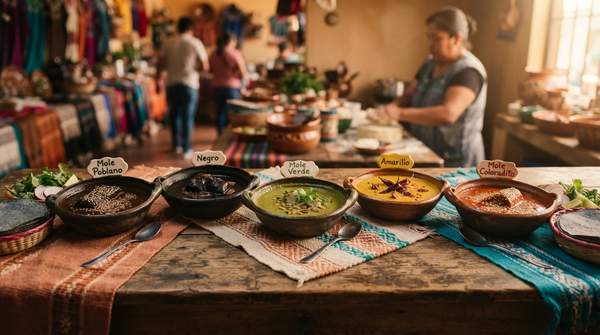
If you've had mole at a restaurant in the United States, odds are it was poblano—the dish people usually mean when they just say "mole." Its base is the trio of ancho, pasilla, and mulato chiles, which Rosa Mexicano describes as producing a rich, earthy, mildly spicy sauce with a subtle chocolate sweetness. Traditionally it blankets chicken or turkey, or fills pork tamales.
The chocolate is real but shouldn't dominate—that point comes through in nearly every serious mole description. What makes poblano distinct is its dense weave of warm spices. Pati Jinich traces them like a map of trade history: sesame seeds brought by African slaves, anise, cloves, cinnamon and black peppercorns from the Orient routes, allspice from the Caribbean, coriander, thyme and marjoram from the Mediterranean. Corn tortillas, she notes, thicken the mole and add an earthy base. She also points out that chile seeds, normally discarded, stay in this "Baroque concoction" from the late 1600s, contributing both heat and flavor.
Mole Negro: Oaxaca's Deep, Smoky Masterpiece
Mole negro is the one that stops people mid-sentence—the sauce is nearly black, and that color is earned, not accidental. Rosa Mexicano attributes it to deliberately charred chile seeds and veins, the rare chilhuacle negro chile, and avocado leaves, carried on a base of chilhuacle negro, mulato, and pasilla chiles. The result is deep, smoky, savory-sweet, and typically served over slow-braised chicken or turkey.
Mike Johnston, writing for Savory Spice about making the seven moles of Oaxaca, calls negro the one with the most ingredients and, in his judgment, "the most complex and interesting flavor profile." His description of the technique makes clear why: you toast and blacken the seeds and pith of the dried chiles—the parts normally thrown away—and blend them into the sauce, adding heat, bitterness, nuttiness, and that dark color. A little fried plantain purée contributes sweetness and a creamy texture, and chocolate plays what he calls "an important layer of flavor" that "should never dominate."
His aside is worth savoring: Mexicans joke that "ir a un mole"—going to a mole—is another way of saying "going to a wedding."
Mole Verde: A Bright and Herbaceous Delight
Mole verde is the palate-cleanser of the family, and the one that breaks most cleanly from the chocolate-and-dried-chile archetype. Rosa Mexicano builds it on poblano, jalapeño, and serrano chiles, describing a sauce that's fresh, herbaceous, tangy, and nutty, best with pork loin, chicken, or roasted vegetables.
The green comes from more than chiles. Spices Inc's overview notes that pepitas, parsley, and green chiles give verde its distinct color and herbaceous flavor, with jalapeños supplying the spice. Rosa Mexicano's shorter gloss agrees: a brighter mole built on tomatillos, fresh herbs, and pumpkin seeds. Notice what's missing—no long-simmered dried chiles, no chocolate. This is the mole to make when you want something lighter, sharper, and faster on the tongue.
Mole Amarillo: The Spicy, Masa-Thickened Classic
Back in Oaxaca, mole amarillo trades its darker cousin's char for vibrancy. Its chile base is chilhuacle amarillo and costeño, and Rosa Mexicano describes the result as a vibrant, mildly spicy, aromatic sauce scented with hierba santa, the fragrant Oaxacan leaf. It's the mole most often matched with heartier fare: beef stew, chicken, or wild mushrooms.
Like all moles, amarillo needs a thickener to hold those flavors together, and that's where the tortilla or masa in Bayless's "thick" ingredient class does quiet work—ground seeds, nuts, or masa give the sauce body where a French cook might reach for a roux. Where negro deepens and darkens, amarillo lifts: its tang and herbaceous note make it the most versatile of the Oaxacan moles for cooks who want complexity without heaviness.
Mole Coloradito: The Fruity and Mildly Spicy Choice
Coloradito—literally "little red one"—is often the friendliest entry point into Oaxacan mole. Rosa Mexicano gives it a base of ancho and guajillo chiles and a mellow, sweet-savory flavor in a brick-red hue, and describes it as a mole balancing chiles, nuts, and warm spices. It's the traditional sauce for enmoladas—tortillas rolled and bathed like enchiladas—or pork ribs.
Think of it as poblano's Oaxacan cousin: similar dried-chile warmth and nutty body, but lighter, brighter in color, and a touch more subdued. If negro is a grand occasion and verde is a weeknight, coloradito is the everyday compromise—complex enough to be interesting, gentle enough for a table of mixed palates.
Comparing Five Essential Mexican Moles
The table below aligns the five moles across the dimensions that actually drive your choice—chiles, flavor, pairings, and the one non-chile ingredient or technique that gives each its signature.
| Mole | Primary Chiles | Flavor Profile | Traditional Pairings | Defining Non-Chile Ingredient/Technique |
|---|---|---|---|---|
| Mole Poblano | Ancho, pasilla, mulato | Rich, earthy, mildly spicy, subtle chocolate sweetness | Chicken, turkey, or pork tamales | Chocolate plus a dense blend of spices—sesame, anise, cloves, cinnamon—with tortillas as thickener; seeds kept in the sauce |
| Mole Negro | Chilhuacle negro, mulato, pasilla | Deep, smoky, savory-sweet, with charred notes | Slow-braised chicken or turkey | Charred chile seeds and veins, fried plantain purée, avocado leaves, and a measured dose of chocolate |
| Mole Verde | Poblano, jalapeño, serrano | Fresh, herbaceous, bright, tangy, nutty | Pork loin, chicken, or roasted vegetables | Tomatillos, fresh herbs, and pepitas (pumpkin seeds) for body and color |
| Mole Amarillo | Chilhuacle amarillo, costeño | Vibrant, mildly spicy, aromatic with hierba santa | Beef stew, chicken, or wild mushrooms | Thickened in the mole tradition with ground seeds, nuts, or masa rather than any chocolate |
| Mole Coloradito | Ancho, guajillo | Mellow, sweet-savory, brick-red | Enmoladas or pork ribs | A nut-and-warm-spice balance, lighter and brighter than poblano |
Read across the rows and the pattern emerges: the darker the mole, the more likely you'll find char, chocolate, and long simmering; the greener and redder moles lean on tomatillos, herbs, and pepitas instead. That single insight will get you most of the way to a confident order at any Mexican restaurant.
Choosing Your Mole Adventure
To select a mole type, consider your preferred flavor profile—sweet, smoky, herbaceous, or spicy—and the protein you intend to pair it with, keeping in mind the defining non-chile ingredients that shape its character. Crave deep, bittersweet intensity over braised turkey? Negro is your mole, and it rewards the patience of a slow braise. Want something bright for a weeknight pork loin or a plate of roasted vegetables? Verde. Feeding a mixed crowd with tamales or enchiladas in mind? Poblano or coloradito will please without polarizing.
You'll know the decision landed when you can point to a specific mole, its chile base, and its pairing before you shop or order—the measurable indicator being that you identify a mole type that aligns with your taste and cooking plans, whether that leads to buying chiles and seeds for a weekend sauce or ordering it by name at your favorite Mexican restaurant. And if you catch the mole bug along the way, remember that these five are only the beginning—Oaxaca alone is famous for seven, and Johnston's joke about weddings hints at how deeply woven the sauce is into Mexican celebration.