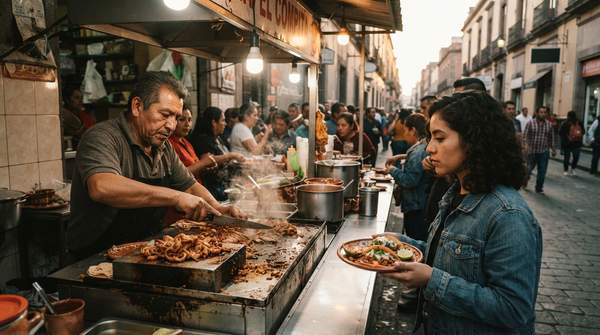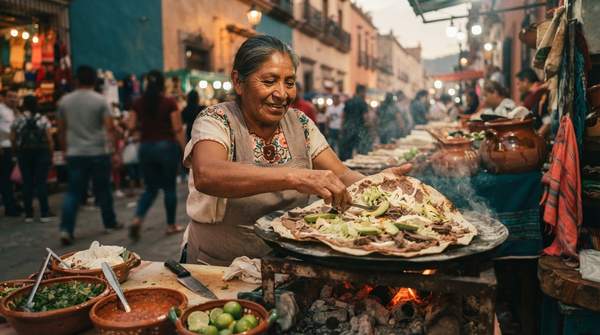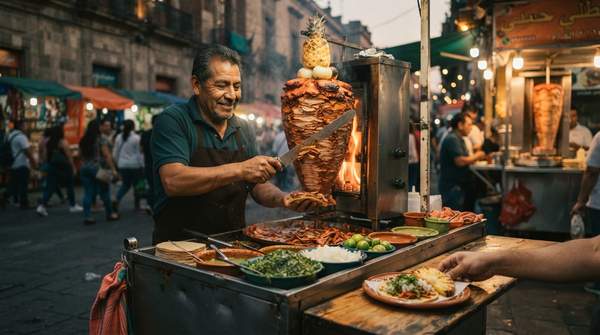
Tacos al pastor, a beloved staple of Mexican street food, boasts a rich history that traces its origins back to Lebanese immigrants who arrived in Mexico. This culinary journey involved significant transformations in ingredients and preparation methods, evolving from the Middle Eastern shawarma into distinct regional variations like Puebla's tacos árabes and Mexico City's iconic al pastor.
The story of tacos al pastor is one of cultural fusion, where traditional Lebanese cooking techniques met Mexican flavors and ingredients. This evolution not only created a new culinary delight but also left a lasting mark on Mexico's vibrant food scene, offering a fascinating glimpse into how global influences shape local cuisines.
Introduction: A Culinary Journey from Lebanon to Mexico
The fascinating origin story of tacos al pastor begins in the 1930s in Puebla, Mexico, with the arrival of Lebanese immigrants. These newcomers introduced the region to their classic shawarma, a dish featuring roast lamb served on a flour tortilla or pita bread, known as pan árabe, according to Tasting Table staff. This initial adaptation, cooked on a vertical or upright grill, became known as tacos árabes.
The technique of cooking meat on a vertical rotisserie, or trompo, was crucial to the development and widespread popularity of al pastor, as noted by Frida's Cocina. This method allowed the meat to cook evenly, with fats and juices dripping down to baste the stack as it crisped, a key part of the equation, according to chef Mario Hernandez of NYC's Temerario.
The Birth of Tacos Árabes in Puebla
Puebla quickly became a central point for this culinary evolution. Historical accounts indicate that establishments such as Tacos Árabes Bagdad and Antigua Taqueria La Oriental began serving tacos árabes in the 1930s, as reported by Frida's Cocina. These early versions maintained a strong Lebanese influence through their cooking method and the use of pita-like bread.
However, even in these initial stages, Mexican preferences began to shape the dish. Local seasonings and, in some cases, pork were incorporated, marking the first steps in its transformation. Chef Marc Meyer of Manhattan's Rosie's highlights that while the vertical spit technique was shared, tacos árabes typically used lamb, seasoned simply with salt, and served with a flour tortilla.
From Lamb to Pork: The Evolution of Al Pastor Marinade
The transition from tacos árabes to tacos al pastor involved significant changes in core ingredients and preparation. While tacos árabes traditionally featured lamb with simple salt seasoning, al pastor saw lamb replaced by marinated pork, according to chef Marc Meyer. This pork is typically sliced thin and stacked onto a trompo, or spit, after marinating for several hours.
The marinade itself underwent a dramatic transformation. Mexico City versions, in particular, developed enhanced marinades that moved beyond the subtle flavors of tacos árabes. Indigenous Mexican ingredients became central, with achiote paste providing the characteristic red color and earthy flavor, as detailed by Frida's Cocina. Fruit juices, chilies like guajillo, and spices such as oregano, cumin, and adobo were also incorporated, creating a distinctive sweet-savory profile. Citrus components, like sour orange, were added for acidity and tenderizing properties. Perhaps most notably, the pita-like bread of tacos árabes was replaced with traditional Mexican corn tortillas, completing the dish's evolution into a recognizably Mexican taco.
Mexico City's Iconic Tacos al Pastor
As the upright grill technique spread beyond Puebla, tacos al pastor, as they are known today, gradually took shape. Mexico City played a pivotal role in popularizing and further evolving the dish. Here, the marinated pork became the standard, often topped with fresh cilantro and onions, and served with various salsas, as described by Tasting Table staff. The preparation and cooking style of the pork, involving spit-roasting, remain relatively consistent across Mexico, even with slight regional variations in the final dish.
The inclusion of pineapple, often cooked on top of the vertical spit, is a hallmark of modern tacos al pastor, though its exact origin remains a culinary mystery. This combination of savory marinated pork, fresh toppings, and the unique cooking method on the trompo cemented tacos al pastor's status as a beloved and iconic Mexican street food.
Puebla's Tacos Árabes vs. Mexico City's Tacos al Pastor: A Regional Comparison
While both tacos árabes and tacos al pastor share a common ancestor in Lebanese shawarma and the vertical spit cooking method, they have evolved into distinct regional specialties. In Puebla, tacos árabes maintain their unique identity. They typically feature lamb, though sometimes pork, cooked on a vertical spit, and are traditionally served in a thick flour tortilla known as pan árabe, as noted by Frida's Cocina. The meat in tacos árabes is often seasoned simply with salt, lacking the complex marinades found in al pastor, according to chef Marc Meyer.
In contrast, tacos al pastor, particularly popularized in Mexico City, are characterized by marinated pork, often seasoned with achiote, dried Mexican chiles, garlic, and vinegar. They are typically served on smaller corn tortillas and garnished with cilantro, onions, and often a slice of pineapple. This distinction highlights how a shared culinary heritage can diverge into unique regional expressions, each offering a different taste of Mexico's rich food culture.
The Journey of Tacos al Pastor: A Timeline
| Year/Period | Location | Key Development | Ingredients/Style |
|---|---|---|---|
| 1930s | Puebla | Shawarma transformed into tacos árabes, served at establishments like Tacos Árabes Bagdad and Antigua Taqueria La Oriental. | Lamb or pork on a vertical spit, served in pan árabe (thick flour tortilla), simple salt seasoning. |
| Soon after 1930s (Puebla/Mexico City) | Puebla, Mexico City | The dish evolved with lamb replaced by pork, and marinades shifted to Mexican flavors. | Pork, marinades with achiote, dried Mexican chiles, garlic, vinegar, and pineapple, served on corn tortillas. |
Exploring the Legacy: Tacos Árabes and Al Pastor Today
The historical journey of tacos al pastor from its Lebanese origins to its iconic status in Mexican street food culture is a testament to culinary adaptation and innovation. To fully appreciate this rich heritage, seek out both traditional tacos árabes in Puebla and modern tacos al pastor in Mexico City or elsewhere. The continued presence and distinct preparation of both tacos árabes and tacos al pastor in their respective regions serve as a measurable indicator of this enduring culinary legacy.