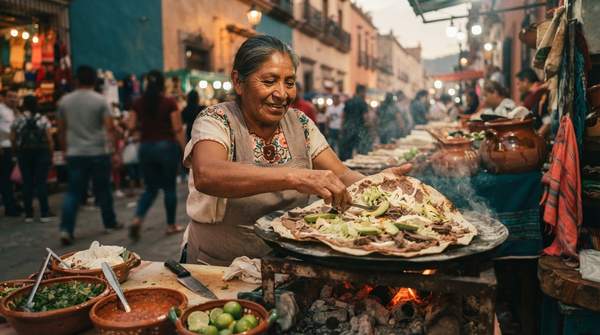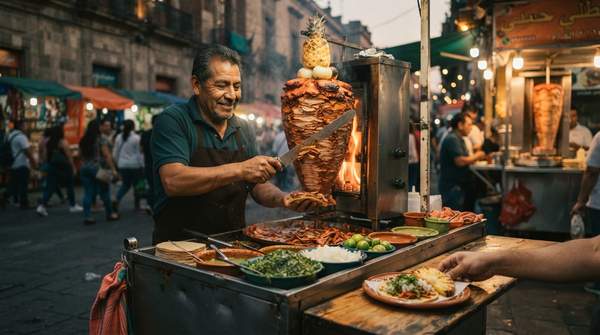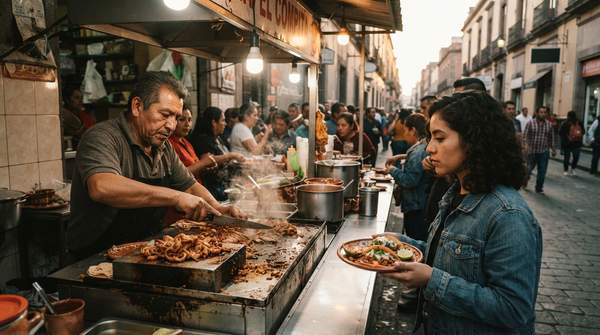
Here is the short answer before you pack your appetite: Mexico City offers two distinct street food experiences, and the one you choose should depend on how adventurous you want to be. In tourist-heavy zones, vendors tend toward familiar fillings like chicken and ground beef. In the neighborhoods where locals actually live and eat, the menu shifts toward whole-animal preparations — suadero, lengua, cabeza, and tripa — that reward diners willing to move past the familiar. This guide contrasts the two scenes, explains what you'll find in each, and gives you a working glossary so you can order with confidence.
Introduction: Navigating Mexico City's Street Food Scene
Mexico City's street food culture is, as travel writer Jess Williamson puts it, "deeply embedded in the daily rituals of its residents." Her observation is the key to the whole trip: where in some cities markets have drifted into tourist territory, in Mexico City they still feed hungry locals every day. That dual identity — a city that caters to visitors and simultaneously cooks for itself — is exactly what makes planning difficult. The same block can hold a stall shaving al pastor for passersby and another simmering cow's cheek for regulars.
The practical question for a culinary traveler is not whether the food is good. It almost certainly will be. The question is which version of the city you want to eat in, and that depends on your comfort with unfamiliar cuts, unfamiliar Spanish, and unfamiliar rhythms of service.
Local Neighborhoods: Authentic and Adventurous
One frequently cited traveler observation, shared in a community answer about eating like a local in Mexico City, draws the line at the menu itself. Stalls in tourist-centric areas, the writer notes, tend to offer chicken and ground beef — proteins an international visitor recognizes instantly. Stalls in local neighborhoods offer suadero (beef brisket), lengua (tongue), cabeza (head, referring to the meat from a cow's head), and tripa (tripe). These are whole-animal preparations: nothing wasted, everything seasoned, and everything unfamiliar to a first-time visitor.
What you trade for that unfamiliarity is atmosphere. In local markets, you're eating where residents eat, in a bustling everyday rhythm rather than a curated visitor experience. The trade-off runs both ways: the adventurous eater gains access to dishes and a cultural texture the tourist zones don't offer, while the cautious eater gains ease, signage comfort, and fillings that require no translation.
Mexico City Street Food Decision Matrix
Use this matrix to match your appetite to your itinerary. Each row is drawn from the traveler observations and food writing described above, contrasting what you're likely to find in each setting.
| Dimension | Tourist-Centric Areas | Local Neighborhoods |
|---|---|---|
| Vibe and Atmosphere | Oriented toward visitors; easier navigation and ordering for non-Spanish speakers. | Bustling and authentic; markets still serve hungry residents daily as part of their routine. |
| Typical Menu Items | Familiar fillings such as chicken and ground beef. | Whole-animal preparations: suadero, lengua, cabeza, and tripa. |
| Flavor Profile | Comfortable, recognizable flavors with minimal ordering risk. | Deeper, more varied flavors from less common cuts and traditional preparations. |
| Best For... | First-time visitors, cautious eaters, and anyone wanting a low-friction meal. | Adventurous eaters seeking authentic local cuisine, unique flavors, and cultural immersion. |
The reasoning behind the matrix is simple: the menu is the signal. If a stall's displayed fillings are ones you'd see on a menu at home, you're in visitor territory. If the fillings require a glossary, you've found the local scene — and the glossary below closes that gap.