When you hear "farm-to-table," you probably picture a Berkeley restaurant menu bragging about the county its arugula came from. But the phrase is older than you think, and the modern movement is not simply about shipping food shorter distances. It's a philosophy, born in 1970s California and personified by Alice Waters, that treats seasonality, locality, and sustainability as ethical commitments rather than logistics choices. Here's the twist: an American "Farm to Table" push existed as early as 1915, sponsored by the US Post Office, and it had almost nothing in common with what Waters built.
The Roots of 'Farm-to-Table': Early American Precedents
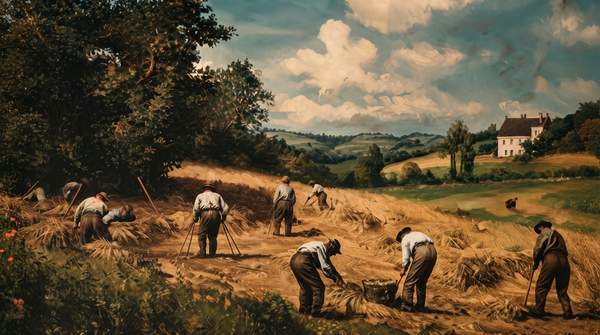
I find this part genuinely delightful. According to the food-history blog Restaurant-ing through history, starting around 1915 and lasting into the early 1920s, a US Post Office-backed "Farm to Table" movement encouraged consumers to have farmers ship them fresh food via parcel post. The goals were straightforwardly economic: lower food costs while aiding farmers. In November 1919, the B. F. Goodrich company supported a "Farm to Table week" in which consumers were meant to drive out to rural areas and buy provisions directly from farms. Kolb's, a New Orleans restaurant that ran its own farm, adopted the slogan, and in the late 1920s the Miami chamber of commerce urged local restaurants to buy from area growers—healthy for diners, good for farmers, and good for the Dade County economy.
The same account notes the movement petered out in the Depression. A 1932 correspondence course for aspiring rural innkeepers warned that growing or buying food in the country did not pay, and that groceries were best sourced from city wholesale dealers. The cultural winds had shifted: prestige now attached to having foods available year-round, regardless of distance traveled.
The Rise of Industrial Food and Counter-Culture Influences
That preference for year-round availability defined the next several decades. As an academic history of the movement compiled by Loyola Marymount University's urban ecology program recounts, processed food "continued to reign supreme until the 1960s and 1970s," when what it calls the hippie movement—people drawn to local and organic food—swept the States. After a few years, those preferences began appearing in formal food structures: the nonprofit "Organically Grown" opened in Oregon in 1979, and Carlo Petrini founded the Slow Food organization in Italy in 1986. Later American pioneers included Kimbal Musk, who started The Kitchen in Boulder, Colorado, in 2003.
So the counter-culture created the receptive soil. But a counterculture alone doesn't produce a restaurant that changes how a country eats. For that, you need someone who could translate politics into a plate of just-picked peas—and that's where Waters enters.