Most Middle Eastern dishes ask very little of you: a teaspoon here, a sprinkle there. The real decision is which seasoning to reach for. If you want a lemony tang without adding liquid, grab sumac. If you're after warm, savory depth in rice, fish, or meat, baharat is your blend. And when a dish needs smoky sweetness with a gentle, lingering heat, Urfa biber is the dark Turkish chile flake that does it. Here's how these three work, and how to start using them tonight.
Introduction to Essential Middle Eastern Spices
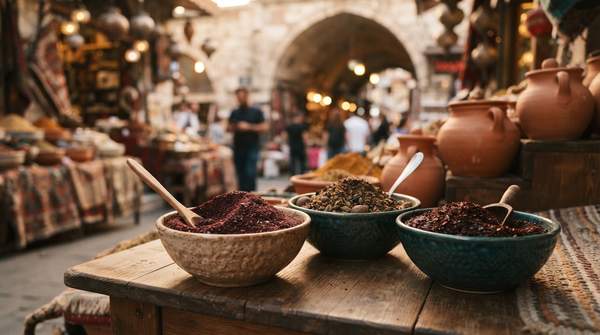
What makes Middle Eastern cooking feel so alive? Chef Andy Baraghani, writing for Bon Appétit, points to the street markets: tangy pomegranate molasses, perfumed waters, and spice blends that "can enliven any dish with just a teaspoon or two." His take on the cuisine comes down to vibrant, powerful ingredients that give each dish character—and the good news for the rest of us is that most of them are now easy to find online or at a well-stocked specialty shop.
Before you chase every jar on the shelf, it helps to understand the individual players. A guide from the Spice Station in Los Angeles makes the case that understanding single spices is the foundation of the cuisine, because each ingredient brings distinct flavors that balance and complement one another in traditional dishes. The region's pantry is deep, and its history runs back through ancient trade routes—sumac alone has been used for over 2,000 years. But you don't need the whole cabinet to cook well. Three seasonings cover an enormous range: one tangy, one warm, one smoky-sweet.
Sumac: The Tangy Red Spice
Sumac looks dramatic—deep burgundy, ground from the dried berries of the Rhus coriaria shrub, native to the Mediterranean and Middle East. But its job is precision: it delivers a tangy, lemony flavor without the moisture of citrus juice. The Spice Station describes tartness similar to lemon, subtle fruity undertones, and a mild astringency, and notes that sumac served as both a culinary ingredient and a natural preservative for more than two millennia.
Food writer Ruth Grindeland, on her Sinful Kitchen blog, adds a softer reading: despite the sharp-sounding name, sumac has "a delicate floral taste and a fresh, citrusy aroma." That combination of tang and perfume is why it shows up in stews, meats, dressings, salads, and dips—anywhere you'd squeeze a lemon but don't want the wet. It also plays a key role in za'atar, the beloved regional blend, where sumac supplies the fresh, tangy note. Think of it as your finishing acid: a dusting over hummus, a marinade for chicken, a bright streak over roasted vegetables.
Baharat: The Warm Spice Blend
Where sumac is a single ingredient, baharat is a team. The Arabic word simply means "spices," and as Teddy Nykiel explains at Taste of Home, the blend is also known as Lebanese seven-spice. The mixture varies by region, but it typically contains some combination of black pepper, allspice, cinnamon, nutmeg, coriander, cumin, paprika, cardamom, and cloves. Read that list again: cinnamon, nutmeg, and cloves are the warm, sweet-leaning spices of the dessert shelf, balanced by pepper and cumin's earthiness.
That composition is what gives baharat its cozy, aromatic character—warm rather than hot. And its use is refreshingly unfussy. People across the Middle East enjoy baharat in rice, fish, and meat dishes, which makes it a natural rub for lamb or chicken, a stir-in for soups and stews, and an easy way to season roasted vegetables. Because every maker's blend differs slightly, taste yours before adding more; the cinnamon-to-pepper balance shifts from jar to jar.
Urfa Biber: The Smoky-Sweet Chile
Urfa biber is the one that surprises people. It's a dark Turkish chile flake, cultivated in Turkey's Urfa region, with a smoky-sweet flavor and mild heat. Grindeland describes its taste as smoky and raisin-like—think dried fruit, even a whisper of chocolate, rather than fresh pepper fire. Crucially, she notes it's less spicy than many chiles while its heat lasts longer on the palate, which is why it's traditionally used to season meats: you get depth first, then a slow, warm finish.
It works beautifully as a finishing sprinkle, too. A food blogger at Wild Greens and Sardines, who sourced her jar at Manhattan's famous spice shop Kalustyan's, uses it in Turkish-style poached eggs, letting the flakes bloom in butter over the yolks. The same move works over scrambled eggs, grilled meats, or roasted vegetables. If you've found ordinary chile flakes one-dimensional, this is the upgrade.
Quick Guide to Essential Middle Eastern Spices
Here's the comparison at a glance, so you can match the seasoning to the flavor you're chasing and the dish in front of you.
| Spice/Blend | Flavor Profile | Primary Ingredients | Best Culinary Uses |
|---|---|---|---|
| Sumac | Tangy and lemony with subtle fruity undertones, mild astringency, and a delicate floral note | Ground dried berries of the Rhus coriaria shrub | Finishing sprinkle and seasoning for stews, meats, dressings, salads, and dips; marinades |
| Baharat | Warm and aromatic, cozy rather than hot; balance varies by region | Typically black pepper, allspice, cinnamon, nutmeg, coriander, cumin, paprika, cardamom, and cloves | Seasoning rice, fish, and meat dishes; rubs for meats; soups and stews |
| Urfa Biber | Smoky-sweet with a raisin-like taste; mild heat that lingers | Dried chile flakes from chiles cultivated in Turkey's Urfa region | Traditionally seasons meats; finishing sprinkle over eggs, such as Turkish-style poached eggs, and roasted vegetables |
The pattern to notice: sumac adds acidity, baharat adds warmth, and Urfa biber adds smoke and slow heat. They're complements, not competitors—a chicken thigh dusted with baharat and finished with Urfa biber, with sumac in the dressing for its salad, is a very Middle Eastern way to build a plate.
Start Your Middle Eastern Spice Journey
Begin experimenting with Sumac, Baharat, and Urfa Biber by purchasing small quantities and incorporating them into simple dishes like pita with olive oil or seasoned meats. Buy small batches rather than bulk jars—spices fade, and a fresh quarter-cup beats a stale pound. Store them airtight, away from heat and light, and give whole spices a quick toast in a dry pan to wake them up. For a first taste, follow Taste of Home's simplest suggestion: mix a spiced blend with good olive oil and mop it up with warm pita. Za'atar, whose tangy backbone is sumac, is the classic choice there, and a natural fourth jar.
The measure of success is simple: the reader successfully uses one of the featured spices in a new dish and observes a distinct flavor enhancement. Dust sumac over your next salad and taste the lemon-bright difference—that's the whole journey, started.
Sources
- 12 Essential Middle Eastern Ingredients and Where to Buy Them Online — Bon Appétit
- The Complete Guide to Middle Eastern Spices: History, Uses, and Recipes — Spicestationsilverlake
- Middle Eastern Spice Guide — Sinful Kitchen
- Turkish-Style Poached Eggs with Urfa Biber - WILD GREENS & SARDINES
- 9 Essential Middle Eastern Spices and Pantry Ingredients — Taste of Home