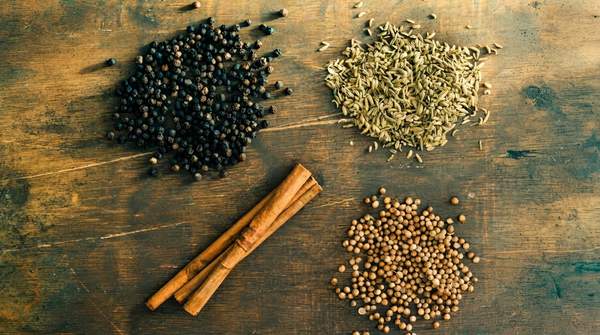
If you have ever wondered why your homemade baharat doesn't taste like the version from your favorite Lebanese restaurant, the answer usually isn't the recipe. It's the spices' form. Buy whole spices, toast them gently in a dry pan, and grind them yourself just before use, and you get a noticeably deeper fragrance than any pre-ground jar can deliver. That single habit — whole, toasted, freshly ground — is the foundation of aromatic Middle Eastern blending.
The Secret to Superior Spice Blends: Whole, Toasted, and Freshly Ground
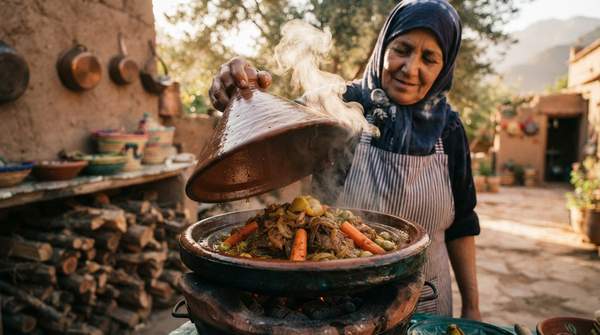
Middle Eastern cuisines lean hard on warm, aromatic blends: baharat for grilled meats and rice, ras el hanout for tagines and stews, hawayej for soups, advieh in Persian cooking. What unites them isn't a fixed ingredient list — regional variations are endless — but a shared approach to coaxing maximum aroma from each spice.
Take cumin, a backbone of baharat and ras el hanout. Its flavor is earthy, slightly bitter, and warm, with almost smoky undertones. Toasting the whole seeds before grinding releases their volatile oils and intensifies the aroma, as Spice Station's guide to Middle Eastern spices explains. Multiply that effect across every spice in a blend and you can see why whole spices are worth the extra ten minutes.
Why Toasting Transforms Flavor
So what is actually happening in the pan? Spices carry their aroma in volatile oils — compounds that are, quite literally, fragile. Heat wakes those oils up. A brief, gentle toast drives the aroma out of the seed and into the kitchen, deepening both fragrance and flavor before the spice ever meets the grinder.
Why not just use pre-ground spices? Because grinding starts a countdown. Once a seed is cracked open, its oils begin escaping into the air rather than staying inside the spice. A Flavour Affair's Katya Mordhorst makes the point directly: in traditional practice, whole spices are ground to a fine powder precisely because that gives the blend "a fresher, stronger aroma." The technique is old; the logic still holds.
Mastering the Toast: A Step-by-Step Guide
Here is the good news: toasting needs no special equipment. A heavy-bottomed, dry pan — no oil — set over medium-low to medium heat is all you require.
- Keep the spices moving. Shake the pan or stir constantly so the heat reaches every seed evenly rather than scorching the ones on the bottom.
- Watch the color. Look for a slight darkening in seeds like cumin and coriander.
- Follow your nose. The most reliable doneness cue is a noticeable lift in aroma — the moment the pan smells genuinely good.
- Never wait for smoke. Smoke means burning, and burnt spices turn bitter in a way no amount of grinding can rescue.
One honest caveat: exact timings vary with your stove, your pan, and the spice itself, so I can't give you a universal number of minutes. Small, dense spices toast faster than a cinnamon stick. Trust your senses over the clock.