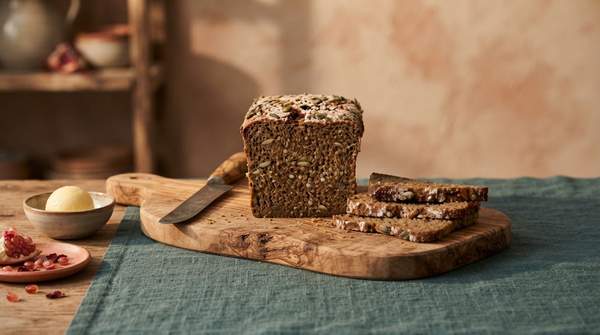
If you want to control the sourness and texture of a Scandinavian rye sourdough like Danish rugbrød, the single most useful variable you can learn to manipulate is fermentation time. Research on rye bread production shows total fermentation of scalded rye flour typically runs about 24 hours, with a working range of 6 to 48 hours, and that lactic acid bacteria species together with fermentation time directly influence the bread's acidity, sugar content, and texture. Longer, slower fermentation builds more pronounced acidity; shorter fermentation keeps things milder. This guide explains the principles, gives you a decision framework, and walks through the two classic rye failures: a burnt crust and a gummy interior.
Mastering Scandinavian Rye Sourdough: The Fermentation Key
I think of rugbrød as a bread of patience. Unlike wheat loaves, where structure comes from gluten, high-percentage rye depends on starch gelatinization and the acids your starter produces over time. A 2025 study on scald fermentation in rye bread, published in the scientific literature indexed by PubMed Central, found that extended fermentation times significantly affect the microbial populations in sourdough systems, and that lactic acid bacteria activity changes the bread's texture, flavor, acidity, and organic acid content. In practical terms: the clock is your seasoning tool. Maurizio Leo of The Perfect Loaf, writing about his own rugbrød, notes that given the high amount of rye flour and a somewhat long fermentation, the bread is expected to carry "a definite sour note to it"—but one that stays balanced rather than overwhelming. That balance is what fermentation time buys you.
The Science of Sour: How Fermentation Time Shapes Rye Bread
Two acids do the flavor work in a rye sour. Lactic acid bacteria produce lactic acid, which reads as mild and round, and acetic acid, which reads as sharp and vinegary. A study of scalded rye fermentation found lactic acid bacteria and fermentation time together govern the bread's acidity and organic acid profile. The practical levers, as Baking Sense's home-baker guide puts it, are temperature and hydration alongside time: warmer dough gives a milder, more lactic flavor, while cooler dough gives a sharper, more acetic one. Higher hydration also mutes the tang; lower hydration strengthens it.
So time sets how much acid accumulates, while temperature and hydration shape which kind of acid dominates. One more sensory note from experienced rye bakers: rugbrød's flavor keeps developing after baking—True North Kitchen's recipe reports the bread's flavor improves after 24 to 36 hours, so judge your loaf the day after it cools.
Rye Sourdough Fermentation: Your Flavor & Texture Decision Framework
Here is the matrix I use to choose a fermentation window. The reasoning path is simple: the research on scalded rye establishes that total fermentation of 6 to 48 hours—commonly around 24—drives acidity and texture development, while the temperature and hydration principles from Baking Sense modulate which flavor expresses. Combine them and you can aim deliberately.
| Goal | Fermentation window (scalded rye, per the 6–48 h research range) | Temperature and hydration setting | Expected character |
|---|---|---|---|
| Mild, gentle tang | Shorter end of the range, toward 6–12 hours | Warmer dough, higher hydration (milder, lactic per Baking Sense) | Softer acidity, less traditional |
| Balanced, classic rugbrød tang | Around the common 24 hours | Moderate temperature | Definite sour note that isn't overwhelming—Maurizio Leo's described result for his rugbrød |
| Pronounced, traditional sourness | Toward the longer end, up to 48 hours | Cooler dough, lower hydration (sharper, acetic per Baking Sense) | Strong tang, denser traditional character |
The exact sourness you land on also depends on your starter's microbial population, your flour, and your kitchen—so treat these windows as a compass, not a GPS. Start near 24 hours, taste, and adjust one variable at a time.
Troubleshooting High-Percentage Rye Sourdough: Common Issues and Solutions
The burnt crust. A baker commenting on the Nordic Kitchen Stories rugbrød recipe reported that baking at 230°C for 40 minutes "burned the top of the loaf to a crisp, including charring all the seeds that were placed on top." The recipe's own guidance addresses hot spots and oven limits: turn the loaf 180 degrees halfway through baking so the front faces the back, and if your oven won't reach 230°C on fan, bake at 220°C instead and add five minutes to the baking time.
The gummy interior. Gummy crumb, according to Baking Sense, usually comes from timing problems before, during, or after baking: an under-proofed loaf, an under-baked loaf, under-fermented dough, or cutting the bread too soon. Their fixes: use the poke test to judge proofing, bake to an internal temperature of about 200–210°F, make sure fermentation is complete before shaping, and let the loaf cool fully before slicing. True North Kitchen's recipe adds a rye-specific insight—its staged baking temperatures are designed to keep the loaf from spending too long in the temperature zone where the enzymes that produce gummy texture are most favorable. Nordic Kitchen Stories likewise insists you wait until the loaf is completely cold, ideally four to five hours or overnight, so the crumb can set.
Bake with Intention: Achieving Your Authentic Rye Sourdough
The decision for home bakers is straightforward: actively adjust fermentation time—within the evidence-supported 6 to 48 hour range for scalded rye, commonly around 24 hours—based on the flavor intensity you want, warm the dough for mildness or cool it for sharpness, and watch dough behavior rather than the calendar alone. If the crust darkens too fast, rotate the loaf halfway and drop to 220°C with five extra minutes. If the crumb turns gummy, audit your proofing, your internal temperature of 200–210°F, and—above all—your patience before slicing. The measurable indicator of success is this: the baker consistently achieves their preferred level of sourness and a desirable crumb texture (not gummy) in their rye sourdough loaves. Hit that twice in a row, and you've stopped following recipes and started baking rugbrød.
Sources
- Scald Fermentation Time as a Factor Determining the Nutritional and Sensory Quality of Rye Bread - PMC
- Rye Sourdough and Smørrebrød — The Perfect Loaf
- Sourdough Baking Guide — Baking Sense®
- Sourdough Danish Rye Bread (Rugbrød) — True North Kitchen
- Nordickitchenstories