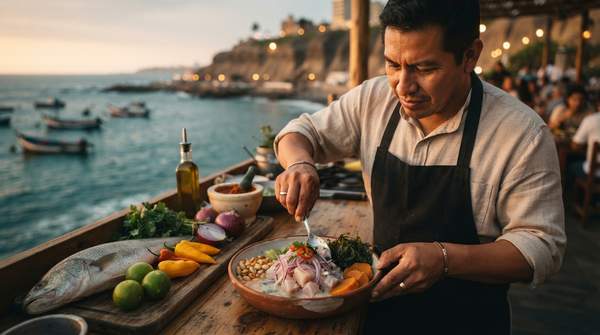
Classic Peruvian ceviche comes down to five components: very fresh white fish, a lime-juice cure, Peruvian ají chiles for heat, aromatics like red onion and cilantro, and traditional sides of sweet potato and corn. The fish is "cooked" not by heat but by acid—the acidity of the lime juice denatures the fish proteins, giving the appearance of cooking, as the recipe site Laylita's Recipes explains. Master each component's function and you can build an authentic-tasting ceviche and vary it intelligently.
The Enduring Legacy of Peruvian Ceviche
Ceviche is far more than a dish in Peru—it is a cultural institution. UNESCO inscribed the practices and meanings of ceviche preparation and consumption on its Representative List of the Intangible Cultural Heritage of Humanity in 2023, honoring Peru's tradition. According to UNESCO's description, ceviche is associated with moments of celebration and social gathering, and with ritual festivities such as that of Saint Peter, patron saint of artisanal fishers. Recipes vary from one region to the next, and that variation itself strengthens regional identity, with knowledge and techniques generally transmitted within families. Traditional female cooks in cevicherías are specifically recognized as bearers of this heritage.
A Journey Through Time: Ceviche's Origins
The dish's roots run deep. Evidence suggests coastal civilizations were preparing a ceviche-like dish some two thousand years ago; the Moche civilization, flourishing between 100 and 800 AD, is believed to have marinated fish using the local tumbo fruit. The Spanish arrival in the 16th century transformed the dish: they introduced limes and lemons, which became the primary curing agents, along with onions and cilantro. This fusion of indigenous and Spanish traditions produced the ceviche we recognize today. The modern style—fish marinated for just a few minutes and served promptly, sashimi-like—was developed in the 1970s by Peruvian-Japanese chefs including Dario Matsufuji and Humberto Sato.
Peruvian Ceviche: An Explanatory Model of Core Components
Think of ceviche as a system, not just a list of ingredients. Each element performs a specific culinary function, and understanding that function tells you how to substitute wisely when an ingredient is unavailable.
| Component | Function | Key Variations and Details |
|---|---|---|
| Fish | Base | Fresh white fish—corvina, halibut, mahi-mahi, sole (lenguado, common in Lima), or shark (tollo, a Trujillo specialty)—cut into bite-sized cubes; must be very fresh and boneless. |
| Citrus cure | Acid / "cooking" agent | Freshly squeezed lime juice denatures the proteins; the resulting marinade is leche de tigre, often served as an appetizer. |
| Ají peppers | Heat and flavor | Ají limo, ají amarillo (fruity, earthy), or the Andean rocoto; distinctively Peruvian heat. |
| Aromatics | Sharpness and freshness | Thinly sliced red onion, chopped cilantro, sometimes garlic. |
| Accompaniments | Balance and texture | Sweet potato, choclo (Peruvian corn), cancha or toasted corn nuts, and sometimes yuyo (seaweed). |
The reasoning here is simple: once you know the fish is the base, the lime is the acid, the ají is the heat, and the aromatics and sides provide balance, you can swap any single element without losing the dish's identity.
The Foundation: Fresh Fish Selection
Everything starts with the fish, and freshness is non-negotiable. Laylita's Recipes insists on "extremely fresh and high quality fish," listing corvina, halibut, escolar, hamachi, and mahi-mahi as suitable choices. Cut the fish into small cubes—about one inch, per a recipe adapted by the dietitian Sarah Koszyk—so the lime juice can penetrate evenly. In Lima, sole (lenguado) is the traditional choice, while the northern city of Trujillo is known for shark ceviche. The fish should be skinless and boneless before it ever meets the citrus.
The Soul of Ceviche: Leche de Tigre and the Citrus Cure
Lime juice is the engine of the dish. Its acidity denatures the fish proteins, changing their texture and opacity so the fish appears cooked without ever touching heat. The marinade that results—mingling lime juice, fish juices, ají, and aromatics—is the celebrated leche de tigre, or "tiger's milk." Many Peruvian cevicherías serve a small glass of it as an appetizer alongside the fish. Use freshly squeezed lime juice, never bottled: Laylita's recipe calls for roughly a cup of fresh key lime or Peruvian lime juice per pound and a half of fish. The modern style cures for only minutes, not hours.
The Spice and Aroma: Ají Peppers and Fresh Aromatics
Heat in Peruvian ceviche comes from ají peppers, which are distinct from other chiles and carry unique Peruvian flavor profiles. Ají limo is the traditional coastal choice; ají amarillo, an orange-yellowish chili with a fruity yet earthy flavor, is used widely across Peruvian cuisine; rocoto, an Andean chili, brings a fiercer burn. Because fresh ají chiles are hard to find outside Peru, pastes are a practical substitute—one home cook writing on the Niko Douniko blog recommends specific ají amarillo and rocoto pastes as reliable stand-ins. Aromatics complete the picture: thinly sliced red onion, chopped cilantro, and occasionally garlic.
Traditional Accompaniments: Completing the Experience
Classic ceviche is never served alone. Sweet potato and corn anchor the plate: boiled sweet potato slices, choclo (large-kernel Peruvian corn), and cancha—toasted corn nuts—provide sweetness and textural contrast against the acidic, spicy fish. Laylita's recipe also lists plantain chips and lettuce leaves as serving options, and some preparations include yuyo, an edible seaweed. The traditional pairing, per historical accounts, was corn on the cob and cooked sweet potato slices alongside the marinated fish.
Mastering Peruvian Ceviche: Your Next Steps
To prepare an authentic classic Peruvian ceviche, focus on selecting very fresh white fish, using fresh lime juice for the cure, incorporating specific Peruvian ají peppers for heat, and serving with traditional accompaniments like sweet potato and choclo. You will know you have succeeded when the fish appears opaque and firm after a short marination, and the leche de tigre has a balanced tangy, spicy, and savory flavor. That visual and tasting check—opaque, firm fish and a balanced marinade—is your measurable indicator of a properly cured ceviche.
Sources
- Peruvian fish cebiche or ceviche - Laylita's Recipes
- Practices and meanings associated with the preparation and consumption of ceviche, an…
- The Rich History of Peruvian Ceviche — Cafedemartin
- Ceviche - Wikipedia — EN
- Ceviche – Classic Peruvian Fish Recipe • Sarah Koszyk
- Authentic Peruvian Ceviche — Niko Douniko