Every dry Sherry starts as the same pale wine, made mostly from Palomino grapes in the Spanish appellation of Jerez. What separates a bone-dry, saline Fino from a rich, nutty Oloroso is not the grape but a decision made early in the cellar: how much grape spirit to add, and whether to let a living veil of yeast called flor grow on the wine's surface. Fortify lightly and the flor flourishes, shielding the wine from air and keeping it pale and crisp. Fortify more heavily and no flor can survive, so the wine ages in contact with oxygen and deepens in color and flavor. Amontillado, wonderfully, does both. Once you understand that single fork in the road, choosing a bottle for tonight's meal becomes simple.
The Criaderas and Solera System: Sherry's Unique Aging Process
Sherry's other great invention is its way of aging. According to the official Sherry wines council, the prolonged storage of wines from different harvests, combined with the need to supply the market with a consistent product, gave rise to the method known as Criaderas and Solera. The same historical moment transformed fortification itself: what had been a way to stabilize delicate wines became a genuine oenological technique, letting the winemaker decide the type of wine to produce by adding grape distillate in different proportions.
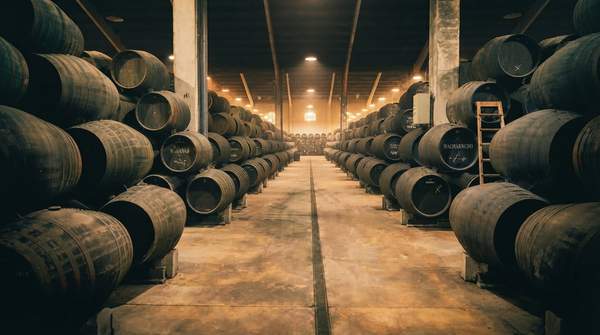
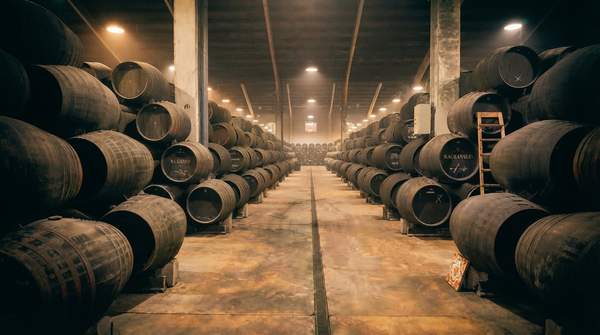
In practice, each Sherry style has its own solera: rows of barrels stacked by age, with the oldest on the floor, as the wine retailer Wine.com explains. When wine is drawn for bottling from the bottom row, it is replaced with younger wine from the row above, and so on up the stack. Wine trickles down row by row, so every bottle blends young and old wine — which is why most Sherry carries no vintage date. The system is fractional blending at scale: it maintains a house style year after year while giving each bottle the freshness of youth and the depth of age at once.
Fino Sherry: The Essence of Biological Aging
Fino is the freshest and lightest expression of the region. Made from Palomino grapes fermented to dryness, it is fortified just enough — to roughly 15 to 17 percent alcohol — to allow the flor yeast to form on its surface. That layer of living yeast keeps air away from the wine, so it stays pale, crisp and tangy, and it can be aged for over ten years in a solera system without losing that character.
The biological aging shows in the glass. The official Sherry council describes Fino's delicate almond aromas and saline touch, its dry and lively character, best served chilled. Spain Food Sherpas adds a bouquet reminiscent of citrus, nuts, brined olives and spices. At the table, this lightness is the point: Fino is ideal with tapas, olives, nuts, cured meats and fresh seafood, from salt fish and fried fish to shellfish and salads. Its cousin Manzanilla follows the same flor-protected path but matures only in the coastal town of Sanlúcar de Barrameda, and is traditionally poured well chilled with seafood.
Amontillado Sherry: A Journey from Flor to Oxidation
Amontillado is the style that tells the whole story of Sherry in a single glass. It starts life exactly like a Fino, with a layer of yeast allowed to grow on its surface. Then, after roughly two years, the wine is fortified further — which kills the flor. From that moment, the wine spends the rest of its maturation oxidatively, exposed to air, just as an Oloroso does.
This dual aging defines its character. The Sherry council describes Amontillado as combining the freshness of Fino with oxidative aging that brings notes of nuts and spices, and it carries a darker color than its younger self. Wine.com lists its alcohol range at 16 to 22 percent and suggests serving it at cool room temperature. That combination of freshness and nutty depth makes it remarkably flexible with food: nuts, cured meats and mature cheeses, baked and smoked fish, shellfish, artichokes, asparagus, mushrooms, game and even spicy dishes all appear on traditional pairing lists, along with stews and intensely flavored dishes.
Oloroso Sherry: Pure Oxidative Elegance
Oloroso takes the opposite path from the start. After fermentation, wines are tasted and classified: pale, clean musts are set to become Fino and Manzanilla, while wines with more structure are classified as Oloroso, as the Spanish wine site Spanish Wine Lover explains. Fortified to a higher level — typically 18 to 20 percent alcohol — the wine never develops flor, so it ages purely oxidatively, slowly concentrating and deepening in the solera.
The result is usually dry, full-bodied and powerful, with the richness that only long air contact can give. Wine.com suggests serving it at the end of a meal with hard cheeses, while the wine guide at Sommo recommends it alongside roast lamb, game, strong blue cheese and mushroom dishes. Oloroso also serves as the base for other categories: Cream Sherry is a sweetened Oloroso. And between Amontillado and Oloroso sits Palo Cortado, which the Sherry council describes as having both the aromatic delicacy of Amontillado and the structure and power of Oloroso — a brief mention, since our focus here is the three core dry styles.
Dry Sherry Styles: A Comparative Guide
The table below contrasts the three main dry styles across the dimensions that matter when you're standing in front of a shelf: how each is aged, what it tastes like, and what to pour it with. The key distinction to watch is the fortification level, because it determines whether flor survives — and therefore whether the wine ages biologically, oxidatively, or both.
| Style | Production / Aging Method | Flavor Profile | Classic Food Pairings |
|---|---|---|---|
| Fino | Aged biologically under a layer of flor yeast; fortified to about 15–17% ABV so the flor can form. Served chilled. | Freshest and lightest style: delicate almond aromas, saline touch, dry and lively, with notes of citrus, nuts, brined olives and spices. | Tapas, olives, nuts, cured meats, salt fish, salads, baked and fried fish, shellfish, white meat. |
| Amontillado | Starts under flor like a Fino; after about two years it is fortified further (16–22% ABV), killing the flor, then ages oxidatively. Served at cool room temperature. | Combines Fino's freshness with oxidative notes of nuts and spices; darker in color, dry and complex. | Nuts, cured meats, mature cheese, stews, baked and smoked fish, shellfish, mushrooms, artichokes, asparagus, game, spicy dishes. |
| Oloroso | Classified after fermentation as a wine with structure; fortified higher (typically 18–20% ABV) so no flor develops, and aged purely oxidatively. | Full-bodied, powerful and rich from long air contact; usually dry. | End-of-meal sipping, hard cheeses, roast lamb, game, strong blue cheese, mushroom dishes. |
Mastering Sherry Pairings: A Guide to Culinary Harmony
How do you use this at dinner? Match the wine's weight to the dish. A chilled Fino belongs at the start of the meal: its light, dry profile complements olives, jamón ibérico, anchovies, fried seafood, grilled prawns and fresh oysters. Move to Amontillado as the plates grow richer — aged cheeses, charcuterie, roast chicken, light soups, vegetables with character like artichokes and asparagus. Save Oloroso for the heartiest courses: roast lamb, game, blue cheese and mushrooms.
What makes Sherry unusual, as Sommo's guide puts it, is that it is one of the few wines that works as an aperitif, through dinner and into dessert, all from the same bottle range — the naturally sweet Pedro Ximénez, made from dried grapes, covers the dessert course with pairings like dark chocolate and vanilla ice cream. For this article's dry focus, though, the progression Fino to Amontillado to Oloroso is the practical arc to remember.
Choosing Your Sherry: A Taste of Tradition
To confidently select a dry Sherry style that aligns with your taste and your meal, use one question as your compass: do you want fresh and saline, complex and nutty, or rich and powerful? If the answer is freshness with seafood or tapas, reach for a chilled Fino. If you want a wine that bridges light and rich dishes — cheese, mushrooms, smoked fish — Amontillado's two-stage aging is your match. If the menu runs to lamb, game or strong cheese, Oloroso's oxidative depth will stand up to it. The measurable indicator of success is simple: the reader identifies and purchases a dry Sherry style for a meal or occasion, or articulates the differences between the styles — the fortification fork that makes each what it is.
Sources
- History of Sherry
- 7 Types of Sherry, Bone-Dry to Sweet: Fino to PX — WINE
- Unexpected pairings with Sherry Wines - Sherry Wines
- Sherry, The Historical Spanish Wine is Back — Spain Food Sherpas
- Sherry 101: An introduction to styles and pairings — Spanishwinelover
- Sherry Wine Guide: Fino to PX, Styles & Pairings — Sommo