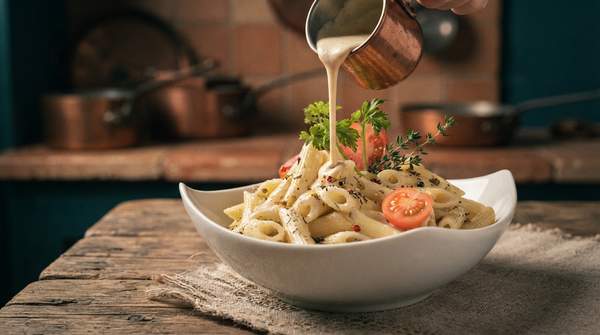
Italy's astonishing variety of pasta shapes is not a matter of whimsy. It is the product of a fundamental agricultural divide: the North, where soft wheat grew poorly suited to pasta alone and eggs entered the dough, and the South, where durum wheat flour and little more than water created an entirely different tradition. Once you understand this split, an unfamiliar shape stops being trivia and becomes legible — its region, its texture, even the kind of sauce it was born to carry.
Italy's Pasta Tapestry: A North-South Divide
Why does a tagliatelle from Bologna feel nothing like a pacchero from Naples? The answer begins with geography. As culinary writer Diana Testa explains, "Pasta shapes often emerged from local necessity; the unique ingredients and tools accessible dictated how pasta was made and what it looked like." Italy's regions each developed distinct climates, agricultural products, and historical influences, and pasta followed the land.
Over generations, cooks experimented with the materials they had, producing hundreds of varieties. The result is a country where the same word — pasta — describes two fundamentally different foods, divided roughly along a line between the egg-and-soft-wheat North and the durum-wheat-and-water South. This framework, drawn from secondary culinary and cultural sources rather than primary academic research, is the single most useful lens for understanding Italy's pasta diversity.
The Fundamental Divide: Northern vs. Southern Pasta Traditions
The core distinction is the dough itself. Northern regions such as Emilia-Romagna include eggs in their dough, resulting in richer varieties like tagliatelle. Southern Italy relies on durum wheat — also known as semolina flour — which, according to Eataly's regional pasta guide, only grows in central and south Italy. Because durum wheat flour is higher in protein, eggs are usually not needed: just a little bit of water binds the dough.
This is the whole story in miniature. Two regions, two crops, two liquids, two pasta traditions — and from that single fork in the agricultural road, hundreds of shapes eventually branched. The table below lays out the divide at a glance.