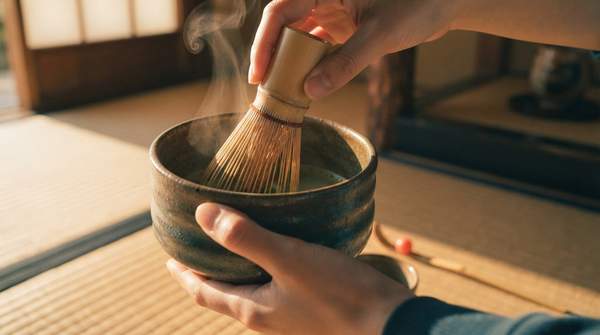
The Japanese tea ceremony, or Chado, is far more than an elaborate way to serve a drink. It is a spiritual discipline rooted in Zen Buddhism that evolved over roughly eight centuries from a monastic aid into a comprehensive art form embodying core Japanese cultural values. Understanding that evolution—and how abstract principles like wabi-cha and Ichi-go Ichi-e are physically expressed in the ritual—is the key to appreciating why a simple bowl of tea carries such weight.
The Origins of Chado: From Medicinal Drink to Spiritual Practice
Tea arrived in Japan from China in the early ninth century, carried home by Japanese Buddhist monks during an age of extensive cultural borrowing from China and Korea. According to the records cited by the Japan Society, tea was esteemed in China both for its medicinal value and as an elegant drink, and the Japanese imperial court in Kyoto praised it in poetry for its purported "spiritual" qualities.
The Japan National Tourism Organization notes that in 815, the monk Eichu, returning from China, where tea had been consumed for over a millennium, prepared sencha for Emperor Saga. The emperor, impressed by the drink, ordered tea plantations established in the Kinki region of western Japan. While nobles adopted the beverage, its widespread popularity did not occur until the twelfth century.
Yet this first introduction did not last. When the Japanese court sent the last of its missions to China in the mid-ninth century, tea drinking seems essentially to have died out in Japan. The drink would wait some three hundred years for its return.