Push open the curtain of a Japanese izakaya and you're not just grabbing dinner—you're stepping into a slow, sociable ritual that can baffle first-timers. The good news: the whole evening follows a predictable sequence. Wait at the entrance to be seated, accept the small un-ordered dish called an otoshi that comes with a per-person seating charge, order your drink before your food, share dishes as they arrive in waves, and ask for the bill with a simple phrase or a crossed-finger gesture. Master those beats and you'll dine like a regular.
Welcome to the Izakaya: Arrival and Seating
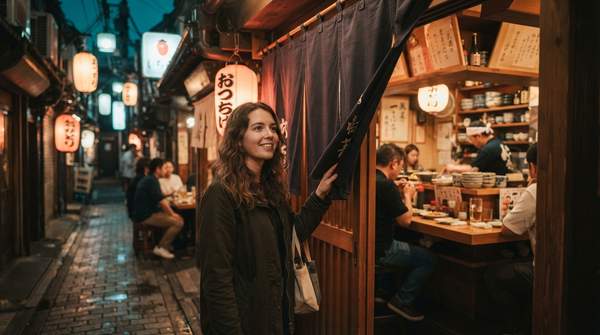
The moment you open the door, you'll hear a chorus of "Irasshaimase!"—a welcome call, not a question. The first mistake newcomers make is walking straight in. Etiquette guides are unanimous on this point: pause at the entrance and wait for a staff member to greet and assist you. Smile or nod to acknowledge the welcome, and let them guide you to your table.
Once seated, you'll typically receive a damp towel, the oshibori, for wiping your hands. Don't wait for a server to notice you afterward—that's not how service works here. Staff won't hover; you summon them when you need them. And don't expect a rushed meal: the pace of an izakaya evening is meant to stretch across a few hours. You're there to linger, not refuel.
The Otoshi and Your First Drink Order
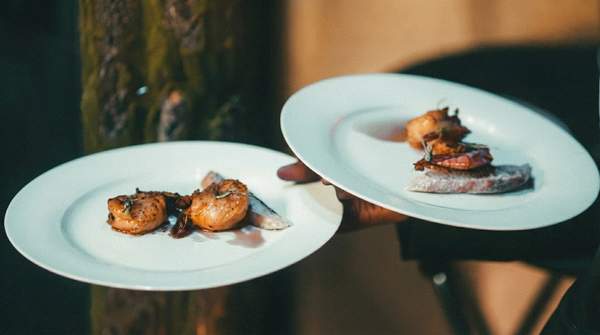
Here's the moment that catches nearly every first-timer: shortly after you sit down, a small dish you never ordered arrives—pickled vegetables, edamame, stewed vegetables, perhaps a bite of fresh fish. This is the otoshi (called tsukidashi in some regions), and it is not a mistake or a scam. As the Tokyo Convention & Visitors Bureau explains, it comes automatically with a seating charge, the otoshidai, usually around 200–1,000 yen per person.
Think of it as a cover charge you can eat, and don't argue with the bill later. One important caveat: the otoshi often contains fish or meat, so if you have dietary restrictions, tell the staff as soon as you're seated. And note that the custom is evolving—some restaurants now skip the otoshi entirely or let you decline it, so it's worth asking rather than assuming.
Drinks come first. The customary opening move is to order your beverage before any food—many Japanese diners start with a beer, but you're free to choose anything, including non-alcoholic options. Some izakaya even offer all-you-can-drink specials.
Navigating the Menu and Ordering Food
With drinks ordered, turn to the food. Izakaya menus are typically divided into sections—salads, grilled dishes, fried dishes—and feature staple snacks like edamame alongside seasonal and deep-fried offerings. Don't try to order everything at once: the custom is to order in waves, a few dishes at a time, as the meal unfolds.
The dishes are built for sharing. As food writer Ryan Noble describes, most groups order a selection for the table, then use chopsticks to move portions from the central plates to your personal plate before eating. If the menu is entirely in Japanese, picture menus are common and pointing is perfectly acceptable. When you're ready to order more, raise your hand and call out "Sumimasen!"—that's the normal way to summon staff, not an interruption.
Enjoying Your Meal: Toasts and Table Manners
Before anyone takes a sip, wait for the group toast. Glasses go up, someone calls "Kanpai!", and only then does the drinking begin. Skipping the toast and drinking early is one of the small missteps that marks a newcomer.
During the meal, keep an eye on your companions' glasses. The gracious custom is to pour drinks for others rather than filling your own—someone will reciprocate. Settle into the rhythm: dishes arrive gradually, conversation stretches, and nobody rushes. If you're worried about language, a small bow works as thanks, and the crossed-finger gesture (more on that below) can carry you through payment without a word of Japanese.
Your Izakaya Journey: A Step-by-Step Timeline
Use this timeline as your mental map for the evening. Each stage pairs the expected action with the custom attached to it, so you always know what happens next.
| Stage | Expected Action | Etiquette / Custom | What to Know |
|---|---|---|---|
| Arrival | Wait at the entrance for staff to greet and seat you | Acknowledge the "Irasshaimase!" welcome | Don't walk straight in |
| Seating | Accept the oshibori hand towel and the otoshi dish | The otoshi is a mandatory cover charge | Usually 200–1,000 yen per person; may contain meat or fish, so mention dietary restrictions immediately |
| First drinks | Order drinks before food | Wait for the "Kanpai!" toast before drinking | Beer is a common opener; non-alcoholic choices and all-you-can-drink plans exist |
| Ordering food | Order in waves; call "Sumimasen!" with a raised hand for staff | Dishes are shared from central plates to your own | Menus are sectioned (salads, grilled, fried); picture menus and pointing are fine |
| During the meal | Linger; pace yourself across a few hours | Pour drinks for others, not yourself | Rushing is out of place |
| Paying & leaving | Say "Okaikei onegaishimasu" or cross your index fingers in an X | Pay at the front counter; tipping is not customary | The otoshi charge appears on the bill—expect it |
One caveat worth repeating: this covers general izakaya etiquette. Highly specialized establishments may run differently, and no guide can list every menu item you might encounter.
Settling the Bill and Departure
When the evening winds down, you have two easy options. Say "Okaikei onegaishimasu" (please bring the bill), or simply cross your index fingers into an X—a gesture widely understood as the request for the check. The bill will be brought to your table, and payment is typically handled at the front counter on your way out.
Two things to remember at the register. First, the otoshi charge will be on there—it's per person, usually in that 200–1,000 yen range, and it's legitimate. Second, do not tip. Tipping is not customary in Japan, and leaving extra money is more likely to cause confusion than gratitude. A small bow on the way out is a gracious, language-free way to say thanks.
Enjoying Your Izakaya Experience
Approach your izakaya visit with confidence by following the chronological steps and etiquette outlined above—especially accepting the otoshi without protest and ordering drinks before food. The phrases here are romaji pronunciation guides, not a full language lesson, but they'll carry you through the night. If you can move through the sequence—wait, sit, toast, share, pay at the counter—without hesitation, you've succeeded. The measurable indicator is a smooth and enjoyable dining experience, free from confusion about customs or unexpected charges: when the bill arrives, nothing on it should surprise you.
Sources
- Izakaya in Japan 2027: Etiquette, How to Order, and Not Stand Out — Ninja Food Tours
- Complete Guide to Izakaya Etiquette: 10 Rules You Must Know at Japanese Bars — HaniSeoul
- Tokyo Izakaya Guide: What Is an Izakaya? Food, Drinks & Etiquette — The Official Tokyo Travel Guide, GO TOKYO
- A Guide to Manners and Etiquette at Izakaya — SAVOR JAPAN
- Japanese Izakaya Etiquette You Need To Know — BYFOOD